
API Reactor Charging Isolators: Improving Operator Safety During Reactor Charging
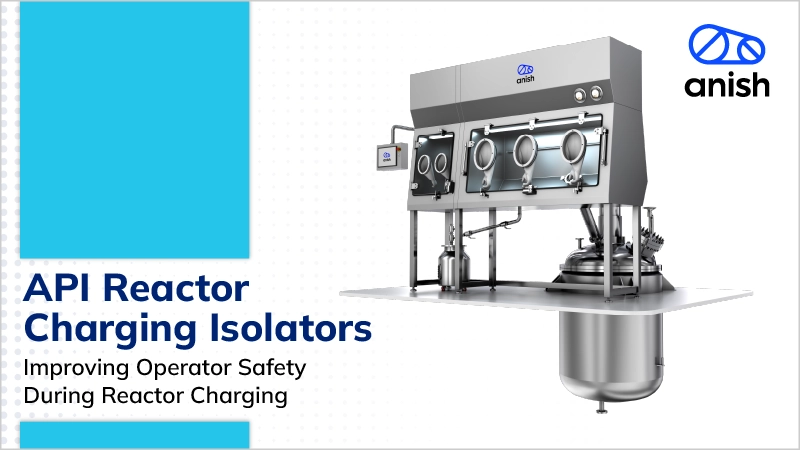
Reactor charging is a critical material-handling step in API manufacturing, particularly when operators handle hazardous, toxic, sensitizing or potent raw materials and intermediates.
During bag opening, powder transfer and charging, airborne particles can escape into the surrounding area and create an operator-exposure risk.
An API Reactor Charging Isolator creates a contained environment around the charging operation, enabling safer and more controlled transfer of materials into the reactor.
Why Containment Is Important During Reactor Charging
Exposure can occur during:
- Opening bags or containers
- Handling and emptying powders
- Transferring materials to the reactor
- Removing empty liners or containers
- Cleaning the charging area
Isolator should therefore cover the complete material-transfer operation and not only the reactor inlet.
The required containment solution is typically determined based on the OEL/OEB of the material being handled, powder characteristics, batch quantity and frequency of operation.
How a Reactor Charging Isolator Works
The isolator provides a physical barrier between the operator and the process material. Operators perform material-handling and charging activities through glove ports while the powder remains within a controlled enclosure.
Depending on the process, the system can incorporate:
- Glove ports
- Bag or drum charging arrangements
- Contained liner systems
- Split butterfly valves
- Rapid Transfer Ports
- Controlled extraction
- HEPA filtration
- Safe-change filters
- Differential-pressure monitoring
- Cleaning systems
- Reactor interface valves
Key Engineering Considerations
Pressure Control
A controlled pressure regime helps prevent hazardous airborne particles from escaping into the surrounding production area.
Differential pressure can be monitored continuously with appropriate alarms and interlocks.
Contained Material Transfer
The transfer arrangement should be selected based on the material characteristics, charging quantity and required containment level.
Typical approaches can include: Bag / Drum Charging → Contained Transfer → Reactor Charging
The objective is to contained material handling throughout the operation.
Reactor Integration
The isolator-to-reactor interface is critical for effective containment and reliable material transfer.
Important considerations include:
- Reactor charging-port size
- Powder flow characteristics
- Product hold-up
- Charging height
- Valve arrangement
- Cleaning accessibility
Automation & Control
The isolator should integrated with a PLC/HMI-based control system to monitor and control critical operating parameters.
Depending on the application, the system can include:
- Differential-pressure monitoring
- Airflow and filtration status
- Door and transfer-port interlocks
- Alarm and event monitoring
- Valve sequencing
- Cleaning-cycle control
- User access levels
- Data recording and batch-related parameter monitoring
Automation helps ensure consistent operation, controlled process sequences and improved operator safety, while reducing dependence on manual intervention.
Filtration
Extract air from the isolator can be passed through suitable HEPA filtration before discharge.
For potent or hazardous materials, safe filter replacement should also be considered to protect maintenance personnel.
Ergonomics
Glove-port positioning, operator reach, visibility and material movement should be considered during design.
Good ergonomics helps operators perform repetitive charging activities safely without compromising containment.
Cleaning
Internal surfaces should minimize powder accumulation and allow effective cleaning.
Depending on process requirements, the system can incorporate contained manual cleaning or integrated wash arrangements.
Demonstrating Containment Performance
Containment performance should be based on the actual material-handling risk and required exposure-control level rather than only an OEB designation.
Where required, containment performance can be demonstrated through suitable surrogate testing under defined operating conditions.
An effective Reactor Charging Isolator for API manufacturing brings together containment, controlled material transfer, reactor integration, filtration, cleanability, operator ergonomics, and automation & control to create a safer and more reliable charging process.
Anish develops customized Reactor Charging Isolators based on material characteristics, process requirements, containment targets, reactor configuration and operating philosophy. Backed by 35+ years of experience and installations across 30+ countries, Anish helps pharmaceutical manufacturers achieve safer handling, consistent operation and effective containment at critical charging points.
Other Blogs
- Ointment Manufacturing Plant for Pharmaceutical Production
- Liquid Manufacturing Plant for Pharmaceutical Production
- Fluid Bed Technology for Nutraceutical Manufacturing
- Extruder & Spheroniser for Pharmaceutical Pelletisation
- Top Spray Fluid Bed Granulator
- Role of Isolators in Pharma Manufacturing
- Fluid Bed Wurster Technology for Nutraceutical Applications
- Fluid Bed Coater for Pharma Manufacturing
- When Should You Retrofit Pharmaceutical Equipment?
- Top Challenges in Granulation Process and How to Solve Them
- Top 10 Pharmaceutical Equipment Used in Tablet & Capsule Manufacturing
- Things to Consider Before Buying Granulation Equipment
- Integrated Granulation Line (Closed Loop Granulation Line) in Pharmaceutical Manufacturing
- How Automation is Changing Pharmaceutical Manufacturing in India
- Fluid Bed Dryer vs Fluid Bed Coater
- Containment Systems in Pharma Manufacturing (OEB Levels Explained)
- Role of Preformulation Parameters in Pharmaceutical Dosage Forms Manufacturing
- Equipment Capacity and Airflow Management for Successful Fluid Bed Coating Scale-Up
- What is granulation? Why do we need it? And what’s the best place to carry it out?
- What is a Fluidized Bed Dryer?
- The Heart and Soul of the Pharmaceutical Industry: Materials & Machines
- Temperature and Humidity: Critical Factors in Fluid Bed Processing
- Mastering Pellets Manufacturing: The Role of QTPP and QbD
- Importance of Solvent Systems in Pharmaceutical Pellets Coating
- Guide to Optimal Fluid Bed Processor Selection: Key Considerations for Effective Material Processing
- Fluid Bed Performance Drivers
- Influence of Column Diameter and Partition Gap on Scale-Up of Bottom Spray Fluid Bed Coaters
- Critical Process Parameters Influencing Performance in Fluid Bed Systems
- Critical Factors for Scale-up in Bottom Spray Fluid Bed Coating
- Binders and Solvents in Granulation
- Types of Granulation in Pharma Manufacturing
- Granulation Techniques To Create Robust Formulation
- Unleashing the Power of Fluid Bed Technology: A Comprehensive Guide
- Pharmaceutical Pellet Production Techniques
- Pharma Granulation: From Powders to Perfect Granules
- Improving Productivity of Fluid Bed Processors
- Drug layering technique in pellet formation
- Drug delivery technologies in Pharmaceutical Formulations
- How to Choose the Right Pressure Shock Resistance (2 / 12 BAR) for Your Fluid Bed Processor