
When Should You Retrofit Pharmaceutical Equipment?
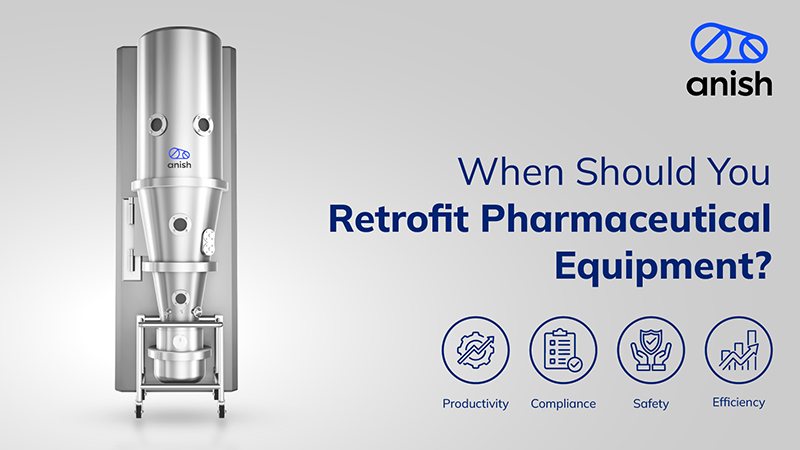
Pharmaceutical manufacturing equipment is designed for long operational life, but over time, technology advances, regulatory expectations change, and production needs evolve. Instead of replacing existing machines, many pharmaceutical manufacturers choose to retrofit equipment to improve performance, compliance, and efficiency.
Retrofitting allows companies to upgrade key components of existing machines while retaining the core structure, making it a cost-effective solution for modernizing pharmaceutical production lines.
What is Retrofitting in Pharmaceutical Equipment?
Retrofitting refers to upgrading or modifying existing pharmaceutical equipment with new components, control systems, or process improvements.
This may include upgrades such as:
- Replacing outdated PLC or control systems
- Installing modern sensors, automation and monitoring systems
- Improving air handling or filtration systems
- Upgrading mechanical components or safety features
- Enhancing containment or GMP compliance
The goal is to improve equipment performance, reliability, and regulatory compliance without purchasing a completely new machine.
When Should You Consider Retrofitting Pharmaceutical Equipment?
- Equipment is Operational but Technology is Outdated
Many pharmaceutical machines remain mechanically strong even after many years of use, but their control systems or automation may become outdated. Retrofitting allows manufacturers to upgrade these systems while keeping the core equipment intact.
- Regulatory Requirements Have Changed
Pharmaceutical regulations evolve over time, especially regarding GMP compliance, data integrity, and process monitoring.
Retrofitting can help upgrade equipment to meet:
- Updated GMP requirements
- 21 CFR Part 11 compliance
- Improved documentation and process monitoring
- Increasing Production Demand
When production capacity needs to increase, retrofitting can improve:
- Process efficiency
- Batch cycle time
- Equipment productivity
Upgrading airflow systems, automation, or process controls can significantly enhance production performance.
- Frequent Maintenance Issues
If equipment requires frequent repairs or maintenance, retrofitting may be a practical solution. Upgrading critical components such as:
- Motors
- Drives
- Sensors
- Control systems
can improve equipment reliability and reduce downtime.
- Improving Process Control and Automation
Older pharmaceutical equipment may lack modern automation features.
Retrofitting can introduce:
- PLC or SCADA-based control systems
- Real-time process monitoring
- Data recording and reporting
- Recipe management systems
These improvements enhance process consistency and traceability.
- Enhancing Operator Safety
Modern pharmaceutical plants require improved safety features such as:
- Better containment systems
- Safety interlocks
- Dust control systems
Retrofitting helps upgrade older machines to meet current safety standards.
Advantages of Retrofitting Pharmaceutical Equipment
- Cost-effective modernization compared to buying new equipment
- Improved process efficiency and productivity
- Better GMP compliance and regulatory readiness
- Reduced equipment downtime
- Extended equipment lifespan
- Enhanced automation and process control
Retrofit vs Equipment Replacement
In many cases, replacing equipment may not be necessary if the core mechanical structure remains reliable. Retrofitting allows manufacturers to modernize machines while minimizing investment.
However, replacement may be required when equipment is severely worn, technologically obsolete, or unable to meet regulatory requirements.
Retrofitting pharmaceutical equipment is an effective strategy for manufacturers looking to upgrade technology, improve compliance, and enhance operational efficiency without replacing entire machines. With the right upgrades, existing equipment can continue to deliver reliable performance for many years.
With 35+ years of experience in pharmaceutical process equipment, Anish Pharma Equip Pvt. Ltd. supports manufacturers with retrofit solutions that upgrade existing machines with modern automation, improved process control, and enhanced GMP compliance, helping extend equipment life and improve production efficiency.
Other Blogs
- Ointment Manufacturing Plant for Pharmaceutical Production
- Liquid Manufacturing Plant for Pharmaceutical Production
- Fluid Bed Technology for Nutraceutical Ingredients
- Extruder & Spheroniser for Pharmaceutical Pelletisation
- API Reactor Charging Isolators: Improving Operator Safety During Reactor Charging
- Top Spray Fluid Bed Granulator
- Role of Isolators in Pharma Manufacturing
- Fluid Bed Wurster Technology for Nutraceutical Applications
- Fluid Bed Coater for Pharma Manufacturing
- Top Challenges in Granulation Process and How to Solve Them
- Top 10 Pharmaceutical Equipment Used in Tablet & Capsule Manufacturing
- Things to Consider Before Buying Granulation Equipment
- Integrated Granulation Line (Closed Loop Granulation Line) in Pharmaceutical Manufacturing
- How Automation is Changing Pharmaceutical Manufacturing in India
- Fluid Bed Dryer vs Fluid Bed Coater
- Containment Systems in Pharma Manufacturing (OEB Levels Explained)
- Role of Preformulation Parameters in Pharmaceutical Dosage Forms Manufacturing
- Equipment Capacity and Airflow Management for Successful Fluid Bed Coating Scale-Up
- What is granulation? Why do we need it? And what’s the best place to carry it out?
- What is a Fluidized Bed Dryer?
- The Heart and Soul of the Pharmaceutical Industry: Materials & Machines
- Temperature and Humidity: Critical Factors in Fluid Bed Processing
- Mastering Pellets Manufacturing: The Role of QTPP and QbD
- Importance of Solvent Systems in Pharmaceutical Pellets Coating
- Guide to Optimal Fluid Bed Processor Selection: Key Considerations for Effective Material Processing
- Fluid Bed Performance Drivers
- Influence of Column Diameter and Partition Gap on Scale-Up of Bottom Spray Fluid Bed Coaters
- Critical Process Parameters Influencing Performance in Fluid Bed Systems
- Critical Factors for Scale-up in Bottom Spray Fluid Bed Coating
- Binders and Solvents in Granulation
- Types of Granulation in Pharma Manufacturing
- Granulation Techniques To Create Robust Formulation
- Unleashing the Power of Fluid Bed Technology: A Comprehensive Guide
- Pharmaceutical Pellet Production Techniques
- Pharma Granulation: From Powders to Perfect Granules
- Improving Productivity of Fluid Bed Processors
- Drug layering technique in pellet formation
- Drug delivery technologies in Pharmaceutical Formulations
- How to Choose the Right Pressure Shock Resistance (2 / 12 BAR) for Your Fluid Bed Processor