
Containment Systems in Pharma Manufacturing (OEB Levels Explained)
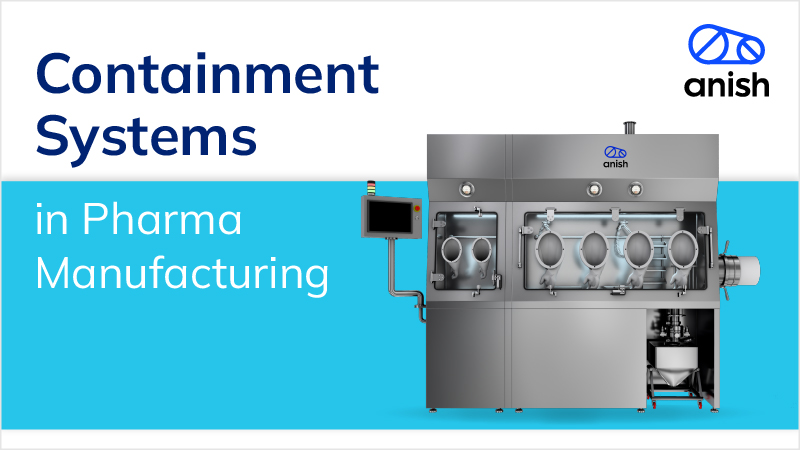
Pharmaceutical manufacturing often involves handling potent active pharmaceutical ingredients (APIs) that can pose health risks to operators if exposure is not properly controlled. To ensure operator safety, product protection, and regulatory compliance, modern pharmaceutical facilities use containment systems.
Containment systems are designed to prevent the escape of hazardous powders, dust, or vapors into the production environment, ensuring safe handling of potent compounds during manufacturing processes such as granulation, blending, milling, and tablet compression.
What is a Containment System?
A containment system in pharmaceutical manufacturing is an engineered solution used to control and limit operator exposure to potent drug substances.
Containment systems typically include:
- Containment isolators
- Closed transfer systems
- High-efficiency filtration systems
- Negative pressure environments
- Barrier technologies
These systems help protect operators, products, and the surrounding environment during manufacturing operations.
Why Containment is Important in Pharmaceutical Manufacturing?
The pharmaceutical industry increasingly develops highly potent compounds that require strict exposure control.
Containment systems help achieve:
- Operator safety when handling potent APIs
- Prevention of cross-contamination between products
- Compliance with GMP and regulatory guidelines
- Controlled and safe manufacturing environments
Without proper containment, airborne particles of potent compounds could create serious occupational health risks.
What are OEB Levels?
To classify the level of containment required, pharmaceutical compounds are categorized using Occupational Exposure Bands (OEB).
OEB levels define the maximum allowable airborne exposure concentration of a compound and help determine the containment strategy required during manufacturing.
Typically, OEB levels range from OEB 1 to OEB 5, with higher levels requiring stronger containment controls.
OEB Levels
OEB 1 – Low Hazard
- Compounds with very low toxicity
- Standard pharmaceutical manufacturing controls are usually sufficient
- Minimal containment measures required
OEB 2 – Moderate Hazard
- Compounds with moderate toxicity
- Basic containment measures and good ventilation are required
- Standard PPE may be sufficient
OEB 3 – Controlled Exposure
- Potent compounds requiring enhanced containment
- Use of closed handling systems and improved dust control
- Controlled material transfer is often necessary
OEB 4 – High Potency
- Highly potent compounds that require advanced containment systems
- Use of isolators, glove boxes, and contained transfer systems
- Strict operator protection measures are required
OEB 5 – Very High Potency
- Extremely potent compounds with very low exposure limits
- Requires fully contained manufacturing environments
- Advanced isolator technology and high containment equipment are essential
Common Containment Technologies in Pharma Manufacturing
Several technologies are used to maintain containment during pharmaceutical processing.
- Containment Isolators: Isolators provide a fully enclosed barrier system that separates operators from potent materials while allowing controlled handling through glove ports.
- Split Butterfly Valves: These valves allow contained transfer of powders between equipment without releasing dust into the environment.
- Closed Transfer Systems: Closed systems allow materials to move between equipment without direct exposure to the surrounding environment.
Common product categories requiring containment include:
- Oncology Drugs
- Hormonal Drugs
- Highly Potent APIs
- Highly Active Small Molecule Drugs
Benefits of Containment Systems
- Improved operator safety
- Reduced cross-contamination risk
- Compliance with GMP and regulatory guidelines
- Better process control and environmental protection
- Safe handling of high-potency compounds
Containment systems play a critical role in modern pharmaceutical manufacturing, especially as the industry continues to develop high-potency drug compounds. Understanding OEB levels and appropriate containment technologies helps manufacturers ensure safe and compliant production environments.
With 35+ years of experience in pharmaceutical process equipment, Anish Pharma Equip Pvt. Ltd. provides containment-ready solutions that help manufacturers handle potent compounds safely while maintaining efficient and GMP-compliant pharmaceutical production.
Other Blogs
- Ointment Manufacturing Plant for Pharmaceutical Production
- Liquid Manufacturing Plant for Pharmaceutical Production
- Fluid Bed Technology for Nutraceutical Ingredients
- Extruder & Spheroniser for Pharmaceutical Pelletisation
- API Reactor Charging Isolators: Improving Operator Safety During Reactor Charging
- Top Spray Fluid Bed Granulator
- Role of Isolators in Pharma Manufacturing
- Fluid Bed Wurster Technology for Nutraceutical Applications
- Fluid Bed Coater for Pharma Manufacturing
- When Should You Retrofit Pharmaceutical Equipment?
- Top Challenges in Granulation Process and How to Solve Them
- Top 10 Pharmaceutical Equipment Used in Tablet & Capsule Manufacturing
- Things to Consider Before Buying Granulation Equipment
- Integrated Granulation Line (Closed Loop Granulation Line) in Pharmaceutical Manufacturing
- How Automation is Changing Pharmaceutical Manufacturing in India
- Fluid Bed Dryer vs Fluid Bed Coater
- Role of Preformulation Parameters in Pharmaceutical Dosage Forms Manufacturing
- Equipment Capacity and Airflow Management for Successful Fluid Bed Coating Scale-Up
- What is granulation? Why do we need it? And what’s the best place to carry it out?
- What is a Fluidized Bed Dryer?
- The Heart and Soul of the Pharmaceutical Industry: Materials & Machines
- Temperature and Humidity: Critical Factors in Fluid Bed Processing
- Mastering Pellets Manufacturing: The Role of QTPP and QbD
- Importance of Solvent Systems in Pharmaceutical Pellets Coating
- Guide to Optimal Fluid Bed Processor Selection: Key Considerations for Effective Material Processing
- Fluid Bed Performance Drivers
- Influence of Column Diameter and Partition Gap on Scale-Up of Bottom Spray Fluid Bed Coaters
- Critical Process Parameters Influencing Performance in Fluid Bed Systems
- Critical Factors for Scale-up in Bottom Spray Fluid Bed Coating
- Binders and Solvents in Granulation
- Types of Granulation in Pharma Manufacturing
- Granulation Techniques To Create Robust Formulation
- Unleashing the Power of Fluid Bed Technology: A Comprehensive Guide
- Pharmaceutical Pellet Production Techniques
- Pharma Granulation: From Powders to Perfect Granules
- Improving Productivity of Fluid Bed Processors
- Drug layering technique in pellet formation
- Drug delivery technologies in Pharmaceutical Formulations
- How to Choose the Right Pressure Shock Resistance (2 / 12 BAR) for Your Fluid Bed Processor