
Role of Isolators in Pharma Manufacturing
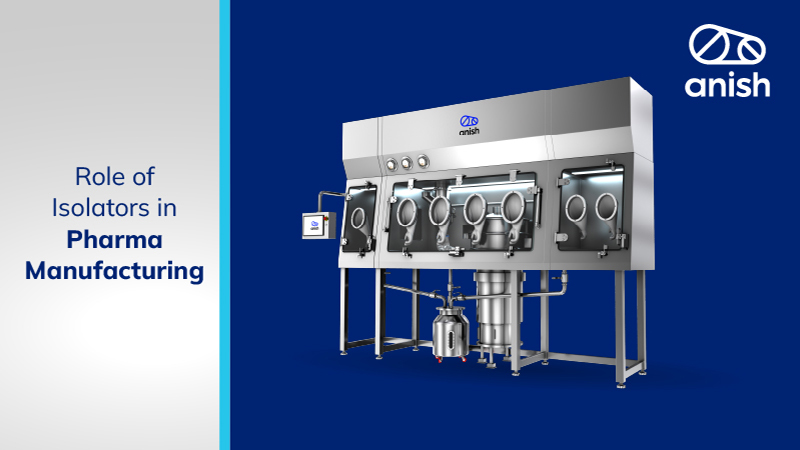
Pharmaceutical manufacturing requires strict control over product quality, operator safety, contamination risk, and regulatory compliance. As products become more potent, sensitive, and complex, manufacturers need advanced containment systems that create a safe barrier between the product, operator, and surrounding environment.
Isolators play an important role in achieving this control. They are widely used in pharmaceutical manufacturing for handling potent APIs, sterile products, toxic materials, hormones, oncology products, and other sensitive formulations where exposure or contamination can create serious risks.
What is an Isolator?
An isolator is a closed and controlled processing system designed to physically separate the product from the external environment and the operator. It generally includes a sealed chamber, glove ports, transfer systems, filtration, pressure control, and cleaning / decontamination features.
The main purpose of an isolator is to create a controlled work zone where critical operations can be performed safely and consistently. Depending on the application, isolators may be designed for containment, aseptic processing, dispensing, sampling, charging, filtration, transfer, or product handling.
Why Isolators are Important in Pharma
In pharmaceutical manufacturing, even small contamination or exposure events can impact product quality, operator health, and regulatory compliance. Isolators help reduce these risks by creating a physical and functional barrier.
They are especially important in facilities handling high-potency active pharmaceutical ingredients, sterile drugs, cytotoxic products, hormones, antibiotics, biologics, and other sensitive materials.
Key Roles of Isolators in Pharma Manufacturing
1. Operator Protection
One of the most important roles of an isolator is to protect operators from hazardous or potent materials. Many pharmaceutical products, especially high-potency APIs and oncology drugs, can be harmful even at very low exposure levels.
Isolators help prevent direct contact, inhalation, and environmental exposure during operations such as dispensing, weighing, sampling, charging, and transfer.
2. Product Protection
In sterile and sensitive manufacturing, the product must be protected from contamination caused by people, room air, dust, microbes, and surrounding equipment. Isolators create a controlled environment that reduces the risk of external contamination.
This is particularly useful for aseptic processing, sterile filling, product sampling, and handling of sensitive formulations.
3. Containment of Potent APIs
Pharma companies increasingly manufacture high-potency products that require strict containment. Isolators support safe handling of OEB 3, OEB 4, and OEB 5 category materials by controlling dust movement and exposure risk.
Properly designed containment isolators help prevent product escape into the surrounding area and support safer multi-product manufacturing.
4. Cross-Contamination Control
In facilities manufacturing multiple products, cross-contamination is a major concern. Isolators help contain materials within a defined process area and reduce the possibility of product-to-product contamination.
This is especially important when handling highly active, allergenic, toxic, or sensitizing compounds.
5. Controlled Processing Environment
Isolators provide a controlled work environment through air filtration, pressure control, airflow design, glove-port access, and material transfer systems. Depending on the process requirement, isolators may operate under positive or negative pressure.
Positive pressure isolators are generally used for product protection, while negative pressure isolators are used for operator and environmental protection.
6. Support for GMP Compliance
Regulatory expectations around contamination control, operator safety, data integrity, cleaning validation, and process control are becoming stronger. Isolators help manufacturers build safer and more compliant production processes.
It also support documentation, controlled access, validated cleaning, and defined operating procedures.
7. Safer Material Handling
Many critical operations in pharma involve manual intervention. Activities such as powder charging, dispensing, sampling, filtration, weighing, and transfer can create exposure risks.
Isolators make these operations safer by providing glove-port access, contained transfer systems, and controlled handling zones.
8. Improved Process Reliability
By reducing environmental influence and manual exposure, isolators help improve process consistency. A controlled environment supports better repeatability, safer operation, and reduced deviation risk.
This is valuable for both production and R&D environments where process reliability is critical.
Common Applications of Isolators
Isolators are used across multiple pharmaceutical operations, including:
- API dispensing and weighing
- Potent powder handling
- Sampling and sub-sampling
- Product charging and discharging
- Sterile product handling
- Filtration and drying support
- Tablet press charging
- Capsule filling support
- new formulation development
- Oncology and hormone product manufacturing
- Aseptic processing and filling support
Types of Isolators
Pharma isolators can be broadly classified based on application:
- Containment Isolators - Used to protect operators and the environment from potent or hazardous products.
- Aseptic Isolators - Used to protect sterile products from contamination during critical operations.
- Dispensing Isolators - Used for weighing, dispensing, and handling of APIs and excipients.
- Sampling Isolators -Used for safe sampling of raw materials, APIs, intermediates, and finished products.
- Process Isolators - Integrated with production equipment for contained manufacturing operations.
Important Design Considerations
The performance of an isolator depends on correct design and application understanding. Important factors include:
- Product type and potency
- Required containment level
- Operator exposure limits
- Pressure cascade
- Airflow design
- HEPA filtration
- Glove port ergonomics
- Cleaning and decontamination method
- Material transfer system
- Integration with process equipment
- Validation and documentation needs
A poorly designed isolator can create operational difficulties, cleaning challenges, ergonomic issues, or containment gaps. Therefore, equipment design must be aligned with process risk and regulatory expectations.
Role of Isolators in Modern Pharma Facilities
Modern pharma facilities are moving towards safer, more controlled, and more flexible manufacturing environments. Isolators support this shift by allowing high-risk processes to be performed within controlled barriers.
They also help reduce dependency on large cleanroom areas in certain applications by creating a localized controlled environment. This can support better facility planning, improved safety, and more efficient operations.
Isolators have become an essential part of modern pharmaceutical manufacturing. They protect operators from hazardous materials, protect products from contamination, reduce cross-contamination risk, and support GMP-compliant processing.
For manufacturers handling potent, sterile, toxic, or sensitive products, isolators provide a reliable barrier system that improves safety, control, and process confidence.
Anish Pharma designs and manufactures containment systems and isolators for pharmaceutical manufacturing applications. we supports customers with customized solutions based on product characteristics, process requirements, containment needs, and facility layouts.
Anish Isolator Systems are developed to support operator safety, product protection, contamination control, and process reliability across critical manufacturing operations. With strong process equipment expertise and application-focused engineering, Anish helps pharma manufacturers build safer and more compliant production environments.
Other Blogs
- Ointment Manufacturing Plant for Pharmaceutical Production
- Liquid Manufacturing Plant for Pharmaceutical Production
- Fluid Bed Technology for Nutraceutical Ingredients
- Extruder & Spheroniser for Pharmaceutical Pelletisation
- API Reactor Charging Isolators: Improving Operator Safety During Reactor Charging
- Top Spray Fluid Bed Granulator
- Fluid Bed Wurster Technology for Nutraceutical Applications
- Fluid Bed Coater for Pharma Manufacturing
- When Should You Retrofit Pharmaceutical Equipment?
- Top Challenges in Granulation Process and How to Solve Them
- Top 10 Pharmaceutical Equipment Used in Tablet & Capsule Manufacturing
- Things to Consider Before Buying Granulation Equipment
- Integrated Granulation Line (Closed Loop Granulation Line) in Pharmaceutical Manufacturing
- How Automation is Changing Pharmaceutical Manufacturing in India
- Fluid Bed Dryer vs Fluid Bed Coater
- Containment Systems in Pharma Manufacturing (OEB Levels Explained)
- Role of Preformulation Parameters in Pharmaceutical Dosage Forms Manufacturing
- Equipment Capacity and Airflow Management for Successful Fluid Bed Coating Scale-Up
- What is granulation? Why do we need it? And what’s the best place to carry it out?
- What is a Fluidized Bed Dryer?
- The Heart and Soul of the Pharmaceutical Industry: Materials & Machines
- Temperature and Humidity: Critical Factors in Fluid Bed Processing
- Mastering Pellets Manufacturing: The Role of QTPP and QbD
- Importance of Solvent Systems in Pharmaceutical Pellets Coating
- Guide to Optimal Fluid Bed Processor Selection: Key Considerations for Effective Material Processing
- Fluid Bed Performance Drivers
- Influence of Column Diameter and Partition Gap on Scale-Up of Bottom Spray Fluid Bed Coaters
- Critical Process Parameters Influencing Performance in Fluid Bed Systems
- Critical Factors for Scale-up in Bottom Spray Fluid Bed Coating
- Binders and Solvents in Granulation
- Types of Granulation in Pharma Manufacturing
- Granulation Techniques To Create Robust Formulation
- Unleashing the Power of Fluid Bed Technology: A Comprehensive Guide
- Pharmaceutical Pellet Production Techniques
- Pharma Granulation: From Powders to Perfect Granules
- Improving Productivity of Fluid Bed Processors
- Drug layering technique in pellet formation
- Drug delivery technologies in Pharmaceutical Formulations
- How to Choose the Right Pressure Shock Resistance (2 / 12 BAR) for Your Fluid Bed Processor